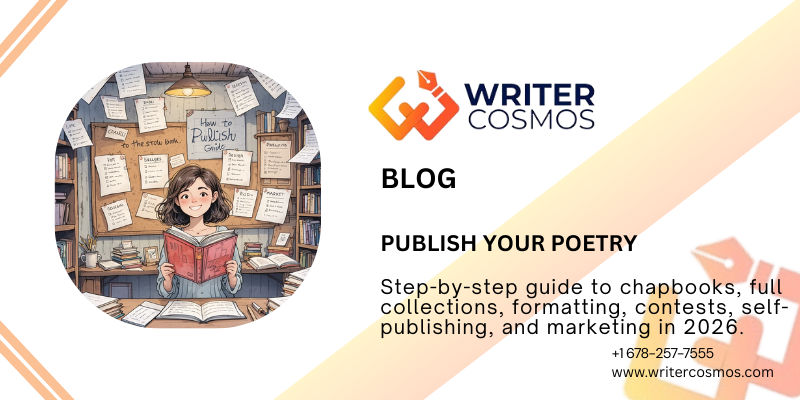
From Whispered Lines to Printed Pages: Your Complete 2026 Guide to Publishing a Poetry Book
There is something deeply personal about poetry. Each line carries a piece of your soul, a captured moment, a feeling you could not keep inside. Now you have gathered enough poems to fill pages, and the question arises: How to Publish a Poetry Book? Whether you dream of a slim chapbook that feels intimate or a full-length collection that shows the breadth of your voice, publishing poetry in 2026 is more achievable and exciting than ever.
This friendly, step-by-step guide walks you through every part of the journey in detail. We will explore chapbook versus full collection differences, how many poems you really need, formatting rules that make your work shine on the page, submission strategies for traditional presses including contests, the self publishing poetry book path that gives you complete control, cover and interior design tips, realistic costs, marketing ideas that work for poets, common challenges with solutions, and real-world examples from poets who have done it.
Writer Cosmos has supported hundreds of poets through their first collections and beyond. We are here to make the process feel less lonely and more like a shared adventure with practical tools and encouragement at every turn. Let us begin.
Deciding Between a Chapbook and a Full-Length Collection
Before you format a single poem, decide what kind of book you want to create. The two main formats serve different purposes and reach readers in different ways.
What is a Chapbook?
A chapbook is a small, focused collection, usually 20 to 48 pages long. It often centers on a single theme, season of life, or emotional thread such as grief, joy, identity, or nature. Chapbooks feel intimate and handmade. They are perfect when you want to test your voice with readers, enter contests, or build momentum before a larger book. Many poets use chapbooks to win recognition and later leverage that success for full-length opportunities.
Typical chapbook features include:
- 15 to 35 poems
- 20 to 48 pages total (including front matter like title page and acknowledgments)
- Often saddle-stitched, stapled, or perfect-bound for a lightweight feel
- Affordable to produce and easy to sell at readings, markets, or online
- Great for debut poets, thematic projects, or limited-edition runs
- Strong candidate for chapbook contests with cash prizes and publication
In 2026, chapbooks remain popular because they allow poets to share a cohesive, bite-sized experience quickly.
What is a Full-Length Collection?
A full-length poetry book is usually 48 to 120 pages or more. It shows range across themes, forms, and time periods while still holding together through voice, recurring images, or overarching motif. Full collections are what most people picture when they think of a poetry book on a bookstore shelf or library display.
Typical full collection features include:
- 48 to 90 poems (average around 60 to 75)
- 64 to 120 pages total
- Perfect-bound or case-bound with a spine for professional bookstore display
- Often divided into sections with title pages for organization
- Stronger candidate for traditional press submission, major awards, and wider distribution
Writer Cosmos tip: If you are new to publishing or have a tight thematic focus, start with a chapbook. It lets you learn the process, gather reader feedback, and build a small but dedicated audience before tackling a full collection. Many poets publish one or two chapbooks first and use that experience to strengthen their full-length manuscript.
How Many Poems Do You Need to Publish a Poetry Book?
The number of poems depends entirely on the format you choose and the story your collection tells. Quality always matters more than quantity. A tight collection with every piece earning its place feels stronger than a padded one.
For a chapbook:
- Minimum comfortable length: 15 to 20 poems
- Sweet spot: 20 to 30 poems
- Maximum before it feels like a full book: around 35 poems
For a full-length collection:
- Minimum for most presses and self-publishing viability: 48 to 50 poems
- Average accepted or successful manuscript: 60 to 75 poems
- Upper range: 80 to 100 poems (rarely more unless poems are very short-lined)
Additional considerations for poem count:
- Poem length affects total pages: short, haiku-like pieces allow more poems; longer, narrative poems mean fewer
- Cohesion is key: ask if these poems speak to each other across the pages and create an emotional arc
- Front and back matter add pages: include title page, copyright, dedication, acknowledgments, table of contents (optional), and author bio
- White space matters: poetry breathes better with generous margins and one poem per page (or two very short ones paired intentionally)
Many Writer Cosmos members find that once they arrange poems into a loose order, the gaps become obvious. That is when you know exactly how many more pieces you need to write, revise, or cut. Aim for every poem to feel essential to the whole.
Writing and Sequencing Your Poetry Collection
A poetry book is not just a greatest-hits album. It is a journey the reader experiences from the first page to the last. Start by gathering every poem you consider strong enough to share. Print them or spread them across a table. Read them without judgment. Group them by theme, mood, image, season, or recurring symbol.
Common structures that create flow include:
- Chronological order (life events, seasons, or personal growth in sequence)
- Emotional journey (darkness to light, grief to acceptance, confusion to clarity)
- Thematic sections (each with its own title page, like “Roots,” “Storms,” “Bloom”)
- Circular structure (begins and ends with the same image, question, or line)
- Mosaic or collage (varied voices, forms, and tones that still feel unified through voice)
Once you have a rough order, read the manuscript aloud from beginning to end. Listen for rhythm, energy shifts, and transitions. Does the collection build tension and release it? Do quieter poems balance louder ones? Cut or move anything that disrupts momentum.
Polish each poem individually with these questions:
- Does every line earn its place through sound, image, or emotion?
- Are line breaks intentional and surprising?
- Does white space enhance meaning?
- Is the language precise yet evocative?
Read the whole book again after revisions. The collection should feel like one long poem made of many parts.
Formatting Rules for a Professional Poetry Book
Poetry formatting is unforgiving. Tiny choices in line breaks, spacing, and margins change how the work breathes on the page. Follow these formatting guidelines to make your manuscript look polished, whether submitting or self-publishing.
General manuscript formatting rules:
- Use a clean, readable serif font: Times New Roman, Garamond, Georgia, or Book Antiqua at 12 pt
- Single-space poems with a blank line between stanzas (no extra indentation unless intentional)
- Left-justify text unless the poem requires centering, right alignment, or a concrete shape
- One poem per page unless two very short poems belong together thematically
- Title the poem in bold or all caps, centered or left-aligned (keep consistent throughout)
- Number pages in the header or footer (start numbering after front matter)
- Use section breaks with title pages if dividing into parts
- Set margins at 1 inch all around (or 0.75 inch inside gutter for binding)
- Save as PDF for submissions and KDP uploads to preserve layout
- For print books, add 0.125 inch bleed if any decorative elements reach the edge
For self publishing poetry book on Amazon KDP, choose a trim size that feels right for poetry:
- 5.5 by 8.5 inches (standard and bookstore friendly)
- 6 by 9 inches (most common for full collections)
- 5 by 8 inches (slimmer, more chapbook-like feel)
Test your layout by printing sample pages. Hold the paper at reading distance. Does the white space feel generous? Do the lines breathe without feeling cramped? Adjust line spacing (1.15 to 1.5) or font size until it feels comfortable and elegant.
Writer Cosmos provides free poetry formatting templates for Word, Google Docs, Atticus, and Vellum that follow these exact rules. Many members say these templates saved them hours of fiddling and helped avoid rejection or poor print results due to formatting errors.
Traditional Submission Tips: Landing a Press or Winning a Contest
If traditional publishing calls to you, here is how to approach it in 2026 with realistic expectations and smart strategies.
Research presses and contests carefully. Look for those that publish work similar to yours in style, theme, and voice. Read recent titles on their websites or through sample PDFs. Check submission guidelines every time because they change.
Common requirements for full-length manuscripts include:
- 48 to 90 pages of poetry (excluding front matter)
- Table of contents (optional but helpful)
- Acknowledgments page listing previously published poems
- Short author bio (100 to 200 words)
- Cover letter (one page, professional, no gimmicks; mention why their press fits your work)
For chapbooks, requirements are often:
- 20 to 48 pages
- Strong thematic unity
- Sometimes, a query letter explaining the concept
Submit during open reading periods, annual contests, or unsolicited manuscript calls. Many small presses read year-round while larger ones have specific windows. Enter contests with entry fees if prizes include publication and cash (many waive fees for low-income poets).
Track every submission in a spreadsheet with columns for:
- Press or contest name
- Deadline
- Submission date
- Response expected by
- Notes on guidelines followed
Personalize each cover letter. Mention specific books or poets from their catalog that resonate with you. Be patient. Response times range from two months to over a year. If you receive a rejection, send thanks if they offer feedback and move on quickly. One yes can change everything.
Writer Cosmos members often recommend starting with smaller presses and contests to build credentials. Many poets land their first full collection after chapbook success or contest wins.
Self Publishing Your Poetry Book: Full Control from Start to Finish
Self publishing poetry book gives you speed, higher royalties, and creative freedom. Here is the detailed step-by-step process most poets follow on Amazon KDP or IngramSpark.
Gather your final manuscript with poems in order. Format according to the rules above. Design or hire a cover that captures your voice (minimalist typography, abstract art, or subtle photography often works beautifully for poetry).
Create front matter pages:
- Half-title page (just the book title)
- Title page (title, subtitle if any, your name)
- Copyright page (year, ISBN if using your own, rights statement)
- Dedication (optional)
- Epigraph or quote (optional)
- Table of contents (optional for poetry; some prefer no TOC to preserve mystery)
- Acknowledgments for previously published work
Add back matter:
- About the author (bio with photo optional)
- Other books or forthcoming work
- Contact info or website/social links
- Thank you note to readers
Upload to KDP. Select paperback and ebook formats. Choose cream paper for a warmer, literary feel or white for crispness. Select black ink interior (color if you have illustrations). Set pricing to cover printing costs while earning 40 to 60 percent royalty (poetry books often price $12 to $18 for print).
Order proof copies. Hold your book in your hands. Check for widows/orphans, line spacing issues, or font rendering problems. Make final tweaks. Approve and publish. Your collection is live within days and available globally.
Writer Cosmos members often share that self-publishing let them keep their vision intact, experiment with design, and start earning sooner through direct sales at readings or online.
Designing a Cover and Interior That Feel Like Poetry
A poetry cover should feel quiet yet striking. Simple typography with elegant fonts, evocative single images, or abstract textures often work best. Avoid busy designs. Hire a designer experienced in literary work or use Canva with minimalist templates and high-quality stock elements.
For the interior, generous white space is your friend. Avoid clutter. Let each poem rest on its own page with breathing room. Consistent design choices like font family, stanza spacing, and page numbers create a cohesive, immersive reading experience.
Marketing and Launching Your Poetry Collection
Poetry thrives on connection and community. Build anticipation before launch and keep momentum afterward.
Ideas that work well in 2026 include:
- Share one poem per week on Instagram, Threads, or Substack with thoughtful captions
- Create short audio clips of you reading your work for TikTok or YouTube Shorts
- Host a virtual launch reading on Zoom or Instagram Live
- Partner with local independent bookstores for in-person events or consignment sales
- Offer signed copies through your website or Etsy for higher margins
- Submit to poetry podcasts, literary radio shows, and review blogs
- Run small targeted ads on Amazon, Facebook, or Instagram aimed at poetry lovers
- Join poetry open mics, reading series, and slams to connect in person
- Create limited-edition bundles with postcards, bookmarks, or art prints
- Encourage early readers to leave honest reviews on Amazon and Goodreads
Plan a series of small actions: one social post, one reading, one review request per week. Word of mouth and genuine connections remain the strongest forces in poetry.
Common Challenges and How to Overcome Them
Many poets face these hurdles and find ways through them:
- “My collection feels scattered” → Re-sequence ruthlessly and write bridging poems if needed
- “Rejections are piling up.” → Keep submitting widely and celebrate small acceptances
- “Self-publishing feels overwhelming.” → Break it into tiny steps and use templates
- “I worry no one will read poetry.” → Build a niche audience through consistent sharing
- “Costs add up quickly.” → Start minimal and reinvest earnings from early sales
Writer Cosmos is full of poets who have been exactly where you are and love sharing what worked (and what did not) in real time.
Conclusion: Your Poems Deserve to Be Read
You have walked through every major decision and step in detail. Whether you choose a chapbook or full collection, traditional submission with contests, or self publishing poetry book, the most important thing is that your words reach readers who need them.
Start today. Print your favorite poems and arrange them on the floor. See what story they want to tell together. Take one small action: format one poem perfectly, write a cover letter draft, or upload a test file to KDP.
For templates, submission trackers, community feedback, formatting checklists, and poets who cheer every milestone, join Writer Cosmos today. Download our free Poetry Book Publishing Checklist and let us walk beside you.
Your voice matters. The world is quieter without it. Share it boldly.
WriterCosmos Free Book Consultation Today
FAQs: Your Top Questions About How to Publish a Poetry Book
How many poems do I need for a poetry book?
Chapbooks usually need 15 to 35 poems. Full collections typically require 48 to 90 poems, with 60 to 75 being the average sweet spot.
What is the difference between a chapbook and a full collection?
Chapbooks are shorter (20 to 48 pages), often thematic, and more intimate. Full collections are longer (64 to 120 pages) and show a greater range across themes and forms.
Should I self-publish or seek a traditional press?
Self-publishing gives control, a faster timeline, and higher royalties. Traditional offers prestige, wider distribution, and potential awards, but is highly competitive.
How do I format a poetry manuscript professionally?
Use 12 pt readable serif font, single spacing with blank lines between stanzas, one poem per page, 1 inch margins, and PDF export. Add generous white space.
How long does it take to publish a poetry book?
Self-publishing can take 2 to 6 months. Traditional submission to release often takes 1 to 3 years, depending on press timelines.
What is the average cost to self-publish a poetry book?
Most poets spend 800 to 3,000 dollars on editing, cover design, formatting, ISBNs, and basic marketing. Minimal routes stay under 1,000 dollars.
Do poetry books sell well when self-published?
Yes, especially with audience building through readings, social media, and direct sales. Many poets earn a steady income from events and online.
How do I find a poetry press or contest to submit to?
Search Duotrope, Poets & Writers, Submittable, and small press websites. Read recent titles to match your style and check 2026 deadlines.
Can I publish a poetry book with no previous publications?
Absolutely. Many first books come from poets with few or no prior journal credits. Focus on a strong, cohesive manuscript.
Start Marketing Your First Book With Writer Cosmos