America’s barmy battle to ban bawdy books
How to Advocate Against Book Bans in Your Community
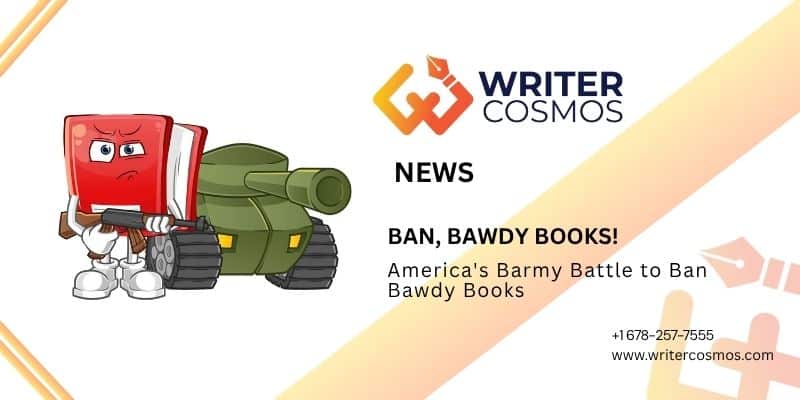
America’s Barmy Battle to Ban Bawdy Books For decades, there have been waves of attempts at widespread book censorship in the USA, a practice rooted in historical and cultural conflicts. The ongoing debate around book censorship in the USA stems from concerns about what is considered “age-appropriate” and what is seen as a threat to traditional values. This barmy battle to ban bawdy books has become a contentious issue, primarily driven by parents and community groups who aim to remove certain titles from school and public library shelves. While these groups often cite reasons like sexually explicit content, profanity, or violence, their efforts are often criticized as a form of ideological censorship that restricts intellectual freedom. This article will provide historical context on the topic of book censorship in the USA, highlighting notable cases and explaining how this ongoing conflict impacts authors and readers. The book censorship in the USA debate is a complex one, pitting freedom of expression against parental rights. The debate is often about specific books, but the larger topic of book censorship in the USA reflects ongoing cultural and political tensions.
A Historical Perspective on Book Censorship in the USA
The history of book censorship in the USA is long and complex, with the first recorded ban dating back to the 17th century. Early instances of book banning were often tied to religious and political dissent, like the burning of pamphlets that challenged Puritan authority. In the 19th century, the Comstock Laws of 1873 made it a crime to distribute “obscene” materials through the mail, laying the groundwork for a more formal system of censorship.
Throughout the 20th century, the reasons for banning books shifted. Literary classics such as Mark Twain’s Adventures of Huckleberry Finn and James Joyce’s Ulysses faced opposition for their use of profanity and sexually explicit content. Interestingly, a common advertising tactic for these books became “Banned in Boston” as a way to boost sales across the country. The late 20th and early 21st centuries saw a rise in challenges to books that addressed themes of race, gender, and sexuality. For example, Toni Morrison’s The Bluest Eye and Maya Angelou’s I Know Why the Caged Bird Sings were frequently targeted, with challengers citing concerns about the books’ themes and language.
Today, the battle over book censorship in the USA is often focused on titles that explore LGBTQ+ themes and the experiences of marginalized communities. The American Library Association (ALA) has noted a significant increase in book challenges, with the majority of targeted works featuring people of color or LGBTQ+ characters.
Landmark Legal Cases and the First Amendment
The First Amendment to the U.S. Constitution guarantees freedom of speech and the press, which includes the right to read and receive information. This principle has been central to legal battles over book censorship in the USA. One of the most important cases is the 1982 Supreme Court ruling in Board of Education, Island Trees Union Free School District v. Pico. In this case, the court ruled that while school officials have the right to remove books that are “pervasively vulgar” or “educationally unsuitable,” they cannot remove books simply because they disagree with the ideas within them. This ruling established a crucial distinction, protecting students’ First Amendment rights in school libraries.
Organizations like the ALA and PEN America are at the forefront of the fight against censorship. They advocate for intellectual freedom and provide resources for communities to combat challenges to books. They argue that censorship, even with good intentions, can limit the intellectual development of students and lead to a less inclusive society.
The Impact on Authors and the Publishing Industry
The rise in book censorship in the USA has a direct impact on authors, especially those from underrepresented backgrounds. When books are removed from shelves, it can discourage authors from writing about diverse experiences, thereby limiting the stories available to readers. This creates a chilling effect on the publishing industry as a whole, making it harder for new voices to emerge and be heard.
At WriterCosmos, we understand the challenges authors face in today’s climate. Our mission is to support aspiring authors in bringing their unique stories to life, regardless of the subject matter. We believe every voice deserves to be heard, and that great books should not be silenced. Our services, from ghostwriting to editing and publishing, are designed to empower authors to navigate the complex world of publishing and ensure their work reaches its intended audience.
The fight against book censorship in the USA is a fight for the freedom to read, think, and express. It’s a reminder that literature is a vital part of a healthy, democratic society, and that protecting access to a wide range of ideas is essential for a vibrant cultural landscape.
Categories
Table of Contents
Related Posts